
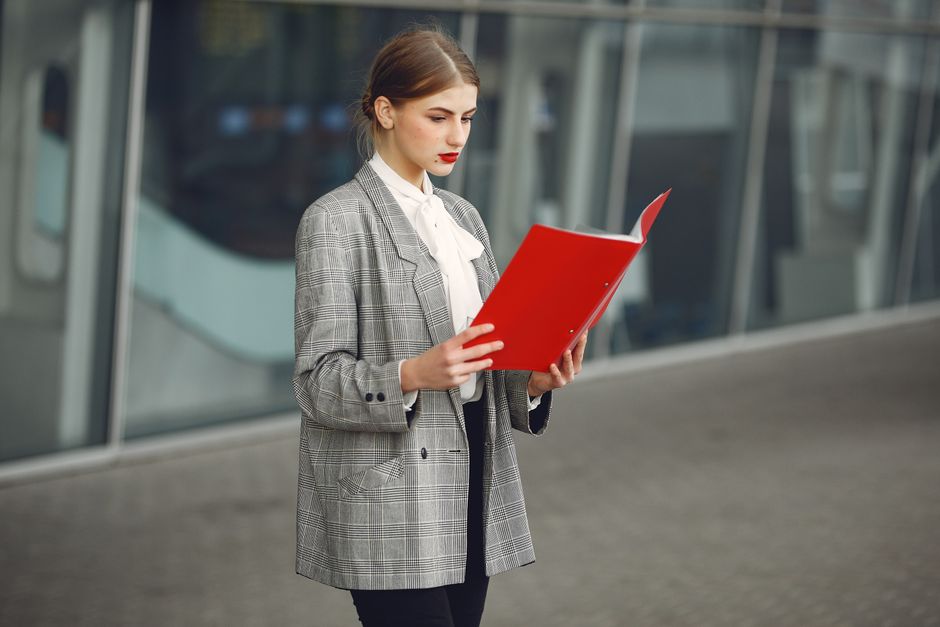
Are you trying to look polished for an interview when February gives you weak daylight, cold streets, and a webcam that turns every neutral into a flat grey block? The answer is not a brighter suit or a louder print. You need controlled contrast, visible texture, and layers that still look intentional after a commute.
Why grey light changes interview outfit choices
February light is usually cool, low, and uneven. Near a window, it can drain warmth from beige, pale grey, and soft blue. Under office LEDs, the same colors may look greenish or washed out. A camera adds another problem: it compresses small differences between fabric and skin, so a smooth dark top can become one featureless shape.
Contrast matters more than brightness
The best February interview outfits create a clear line between your face, neckline, and jacket. A navy blazer over a soft white or blue shirt usually reads more clearly than black over charcoal. For a video call, choose a top that is at least one shade lighter or warmer than the jacket. This gives the camera a clean edge around your shoulders without making the outfit look theatrical.
Texture keeps winter clothing from looking flat
Fine merino, brushed cotton, matte crepe, and lightly textured wool show more detail than thin jersey or shiny polyester. Texture also helps an outfit feel seasonally correct without relying on a large pattern. Skip fuzzy mohair near the microphone, noisy bracelets, and fabrics that catch window glare. The strongest choice is a simple matte layer with one visible weave.
My verdict is simple: build around contrast and texture first, then worry about color. A grey February background rewards definition, not extra decoration.
Which colors stay clear on a grey February video call?
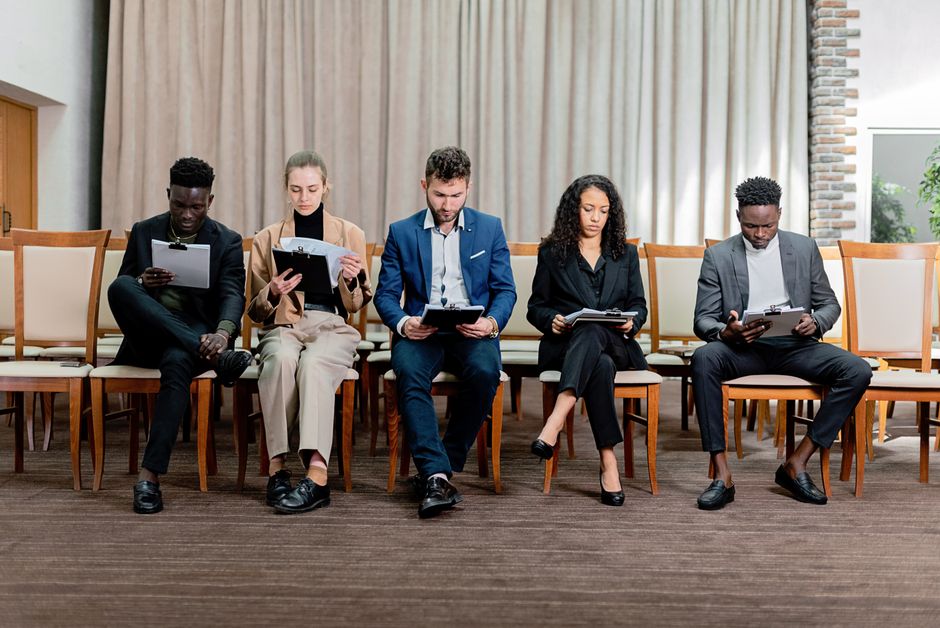
Start with colors that hold their shape under both daylight and office lighting. Deep navy, forest green, burgundy, muted teal, and warm ivory tend to keep more visual separation than pale grey or dusty lavender. Test the outfit through the same camera you will use for the interview, with your face about 60 to 75 centimetres from the lens.
| Color | How it reads in grey light | Best use |
|---|---|---|
| Deep navy | Sharp but softer than black | Blazer, suit, cardigan |
| Forest green | Adds color without looking loud | Knit or blouse |
| Warm ivory | Brightens the face without glare | Shirt, shell, fine knit |
| Burgundy | Visible on camera and still restrained | Top or small accessory |
| Pale grey | Often disappears into the background | Use only with darker layers |
Do not judge the outfit under bedroom lighting and assume it will work elsewhere. Record a ten-second clip with the camera at eye level. Look for a clean neckline, visible shoulders, and a face that remains the visual focus. The clear winner for most interview settings is navy with warm ivory or muted blue. It has enough contrast to survive poor lighting but still looks conservative in a formal workplace.
How to build a three-layer outfit for a cold commute
A February interview outfit has to survive more than the meeting. It must handle walking, heating systems, coat removal, and the awkward moment when a scarf leaves static across your shirt. Use this three-step formula.
- Choose the visible base layer first. Pick a warm ivory shirt, muted blue blouse, or fine merino knit with a neckline that sits flat. Avoid a deep scoop neck if the interview is formal, because it can look lower once you sit down.
- Add one structured layer. A blazer, cropped jacket, or neat cardigan should create a clear shoulder line. Keep the layer matte. Shiny satin and high-contrast windowpane checks can flicker on video.
- Finish with practical footwear and one quiet accessory. Loafers, low block heels, or clean leather ankle boots work better than shoes that force you to walk carefully on wet pavement. Add one watch, small earrings, or a plain belt. More accessories create sound and movement.
- Test the seated version. Sit for five minutes. Check that the jacket does not pull across the buttons, the sleeves do not ride above the wrist, and the waistband remains comfortable. The seated view is the version an interviewer sees most often.
Its 100% merino wool and fine knit make it useful under a blazer without adding obvious bulk. Choose navy, dark green, or warm beige. This is not financial advice; it is a clothing budget recommendation, and the verdict is to spend on fit before adding a second color.
Which interview pieces deserve your clothing budget?
Price alone does not predict how well a garment will perform. For an interview, the useful question is cost per successful setting: can you wear the item on camera, in an office, and at a networking event without it looking tired or too casual?
The strongest complete purchase is the J.Crew Factory blazer over the Uniqlo merino sweater, paired with a dark trouser. That combination gives the camera structure and gives you enough warmth for February. The Banana Republic Factory pant wins when travel matters more than formality. The Sam Edelman loafer is worth choosing only if you can walk naturally in it; a polished shoe that changes your stride is a bad interview shoe.
Bottom Line: Put most of the budget into the blazer if the interview is formal, or into tailoring if the clothes already fit poorly. The merino sweater offers the best price-to-use ratio.
Five mistakes that make a polished outfit look flat
A good outfit can fail because of small details. These errors show up more clearly in grey light and on a laptop camera.
- Black beside black: A black jacket over a black top can erase the neckline. Add warm ivory, muted blue, or a visible textured knit.
- Pale grey without contrast: A pale grey suit against a grey wall may disappear. Use a darker top, a warmer background, or both.
- Overly thin fabric: Thin jersey can reveal bra lines, cling at the waist, and look casual under office lighting. Choose fabric with enough weight to hang cleanly.
- New shoes on interview day: Blisters change posture. Wear the shoes at home for at least 30 minutes and walk up stairs before the meeting.
- Large prints on video: Tight stripes and tiny checks can shimmer on screen. A solid color with texture gives the camera more stable information.
- Ignoring the coat transition: A sharp outfit hidden under a huge athletic parka can feel mismatched when you arrive. Use a simple wool coat or remove the outer layer before entering the meeting space.
The mistake I would avoid first is the all-black outfit. It feels safe in a mirror, but it often gives a webcam no separation between your hair, jacket, and background. Navy creates nearly the same authority with a clearer outline.
What changes between an in-person and video interview?
Should you dress differently for a video interview?
Yes. For video, prioritize the upper half: a clear neckline, matte fabric, and color contrast near the face. Trousers still matter because dressing fully helps you sit and move with purpose, but the camera will not reward expensive tailoring below the desk. A navy blazer with a warm ivory knit is the safest high-clarity combination.
What should you wear for an office interview?
For an office, match the formality of the employer but move one step sharper than everyday staff clothing. A structured blazer, tapered trouser, and loafer work for many business-casual settings. If the workplace is creative, replace the blazer with a textured cardigan or shorter jacket, not a novelty print. The outfit should show judgment before it shows personality.
When should you skip a new purchase?
Skip the purchase when the problem is fit, not wardrobe variety. Do not buy a pale grey suit for a grey-light interview unless you already own a darker top and can test the combination on camera.
The clearest February interview outfit is not the most dramatic
For most candidates, the winning February interview outfit is a deep navy structured layer, a warm ivory or muted blue top, dark trousers, and quiet leather shoes. It reads clearly in weak daylight, works after a cold commute, and gives the camera enough contrast to keep your face central.
Spend first on fit, then on fabric, then on color. Test the complete outfit seated, under the actual lights, with the camera you will use. That short rehearsal catches more problems than a last-minute shopping trip.
February interviews will keep pushing wardrobes toward lighter layers, smarter knitwear, and clothes that work across physical and digital rooms. The useful standard is not whether an outfit looks impressive on a hanger. It is whether it stays clear, comfortable, and credible when the light is working against it.