
Most people get oversized blazers wrong. They buy a blazer two sizes up, throw it over a hoodie, and wonder why they look like a kid wearing their dad’s suit jacket. The problem isn’t the blazer. It’s the fit, the fabric, and the proportions underneath.
An oversized blazer works when it looks intentional. That means structured shoulders, a dropped but not collapsed shoulder seam, and fabric that holds its shape instead of pooling around your wrists. Get those three things right, and you can wear it with almost anything. Get them wrong, and no amount of styling saves you.
Fit First: The Difference Between Oversized and Just Too Big
Oversized is a design choice. Too big is a mistake. The difference comes down to three measurements: shoulder width, sleeve length, and body length.
On a proper oversized blazer, the shoulder seam sits 1 to 2 inches past your natural shoulder. More than that, and the blazer starts collapsing. The sleeve should end at the base of your thumb, not cover your knuckles. The body should hit mid-thigh — longer than a regular blazer, but not a coat.
Here’s the practical test: put the blazer on over just a t-shirt. Raise your arms. If the whole jacket lifts up like a tent, the armholes are too low. That’s the most common failure mode on cheap oversized blazers. The armhole should sit high enough that your arms move independently from the body of the jacket.
What to Look For in the Store
- Shoulder seam: dropped 1–2 inches, never halfway down your bicep
- Armhole: high and clean, no fabric bunching at the armpit
- Body length: mid-thigh, not knee-length
- Sleeve: ends at thumb base, stackable but not swallowing your hand
If you’re between sizes, size down. An oversized blazer that’s slightly trimmer still reads as oversized. One that’s too big reads as borrowed.
Fabric Rules: What Actually Drapes Versus What Wrinkles
Fabric makes or breaks an oversized blazer. A stiff wool blend holds its boxy shape. A cheap polyester blend collapses and wrinkles within an hour. You can feel the difference immediately.
For streetwear, you want fabrics with some structure but not stiffness. Wool-polyester blends (60/40 or 70/30) are the sweet spot. They hold their shape, resist wrinkles, and don’t cost $800. Pure wool drapes beautifully but requires more care. Cotton twill works for summer but wrinkles fast.
Avoid anything shiny. Shiny polyester looks cheap in oversized cuts because the extra fabric catches light at odd angles. Matte finishes hide imperfections.
My pick for most people: the COS relaxed blazer in wool blend. It runs about $225, has a proper dropped shoulder, and the fabric holds up through a full day of wear. Arket’s oversized wool blazer is similar, slightly boxier, around $250. On the budget end, Uniqlo’s relaxed blazer at $79 is surprisingly good for the price, though the armholes sit lower than I’d like.
Proportion Play: What Goes Underneath Changes Everything
The biggest styling mistake I see is pairing an oversized blazer with oversized everything. Baggy blazer, baggy hoodie, baggy jeans. That’s not a look. That’s a laundry pile.
The rule: one oversized piece per outfit. If the blazer is big, keep what’s underneath relatively fitted or at least not competing for volume. A slim hoodie or a fitted t-shirt works. A chunky knit sweater underneath an oversized blazer adds bulk in the wrong places.
For bottoms, straight-leg or slightly tapered pants balance the boxiness up top. Wide-leg pants can work, but only if the blazer is on the shorter side of oversized. If both pieces are huge, you lose all shape.
Three Proportion Combos That Work
- Oversized blazer + fitted tee + straight jeans: the easiest, most reliable combo
- Oversized blazer + slim hoodie + tapered trousers: streetwear-leaning but still clean
- Oversized blazer + cropped tank + wide-leg pants: works only if the blazer is mid-thigh or shorter
If you’re wearing a hoodie underneath, skip the chunky sneakers. The proportions get muddy. Clean sneakers or a slim boot balance the volume.
Color and Pattern: Keep It Simple or Commit Fully
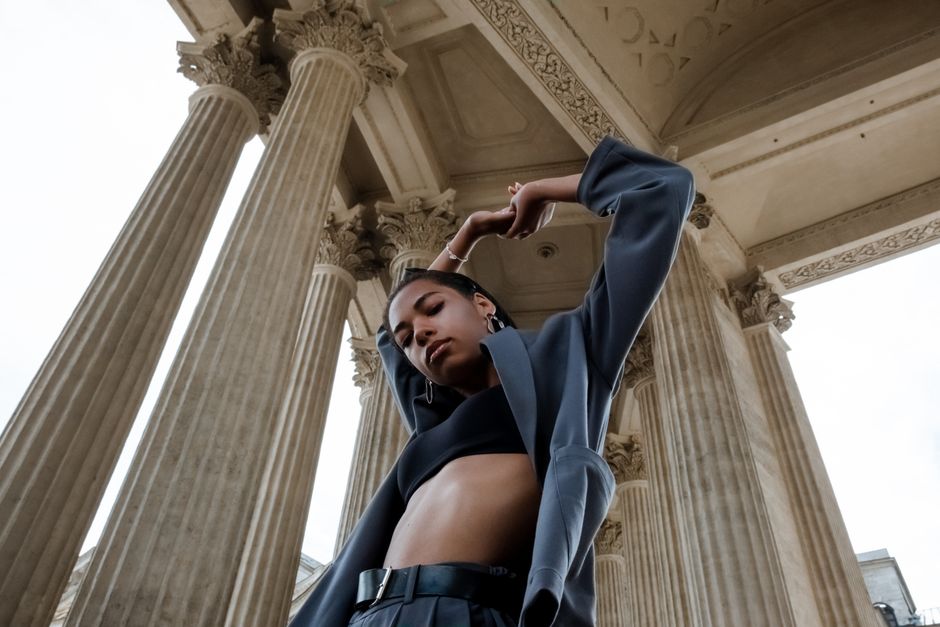
Oversized blazers already make a statement through volume. Adding loud patterns on top of that is risky. A plaid oversized blazer can look great, but it’s harder to style. Solid colors — black, charcoal, camel, navy, olive — are more forgiving and work with more outfits.
If you’re buying your first oversized blazer, get black or charcoal. It goes with everything, hides wrinkles, and looks intentional even when you’re lazy. Camel and olive are good second options. Avoid white or cream unless you’re prepared to baby it.
For patterns, stick to subtle checks or pinstripes. A bold plaid oversized blazer reads as costume unless the rest of the outfit is extremely minimal. If you’re going to do it, keep everything else black or white.
The Styling Details That Separate Good From Great
Small details change how an oversized blazer reads. Sleeve stacking is the biggest one. Pushing the sleeves up to your forearms instantly makes the look more casual and intentional. It also solves the problem of sleeves that are slightly too long.
Buttoning rules are different for oversized blazers. You almost never button an oversized blazer. It’s designed to hang open. If you must close it, use just the top button and let the rest hang. Buttoning all the way creates a weird, stiff silhouette that fights the whole point of the oversized cut.
Layering a collared shirt under an oversized blazer works, but the collar needs to sit inside the blazer’s lapels, not fight them. A pointed collar that pokes out awkwardly ruins the clean lines. Stick to band collars, minimal spread collars, or no collar at all.
Accessories matter more with oversized pieces. A small crossbody bag or a cap adds structure to the loose silhouette. Skip the bulky backpack — it adds visual weight exactly where you don’t want it.
When Not to Buy an Oversized Blazer
Oversized blazers don’t work for every body type or every context. If you’re very petite, an oversized blazer can overwhelm your frame. Look for a “relaxed” fit instead of a true oversized cut — something with a slightly dropped shoulder but a shorter body. The Acne Studios relaxed blazer (around $600) is a good reference point for this, though it’s expensive. & Other Stories makes a more affordable version around $180.
If you work in a formal office, an oversized blazer probably won’t pass for business attire. It reads as casual by design. You can push it slightly with a dark color and tailored trousers, but don’t expect it to replace a proper suit jacket.
And if you’re buying online, check the return policy before you commit. Oversized fit varies wildly between brands. What’s “oversized” at Uniqlo is different from what’s “oversized” at COS. Order two sizes if you can and return the one that doesn’t work.
Budget Breakdown and Buying Guide
| Price Range | What You Get | Best Pick |
|---|---|---|
| Under $100 | Basic polyester blends, lower armholes, shorter lifespan | Uniqlo Relaxed Blazer ($79) |
| $100–$300 | Better fabrics, intentional oversized cuts, decent armholes | COS Relaxed Wool-Blend Blazer ($225) |
| $300–$600 | Premium fabrics, excellent construction, designer details | Arket Oversized Wool Blazer ($250–$350) |
| $600+ | Luxury fabrics, perfect proportions, investment pieces | Acne Studios Relaxed Blazer ($600+) |
The sweet spot is $200–$300. Below that, you’re fighting the fit. Above that, you’re paying for brand name more than construction. The COS blazer at $225 is the best value I’ve found — it nails the shoulder and armhole proportions that most cheap blazers miss.
One more thing: don’t dry clean your oversized blazer every week. Spot clean it, air it out, and dry clean only when it’s actually dirty. Over-cleaning breaks down the fabric faster, especially on wool blends.
The single most important takeaway: an oversized blazer only works when the shoulders fit and the armholes sit high. Everything else is fixable with styling. Those two things aren’t.