
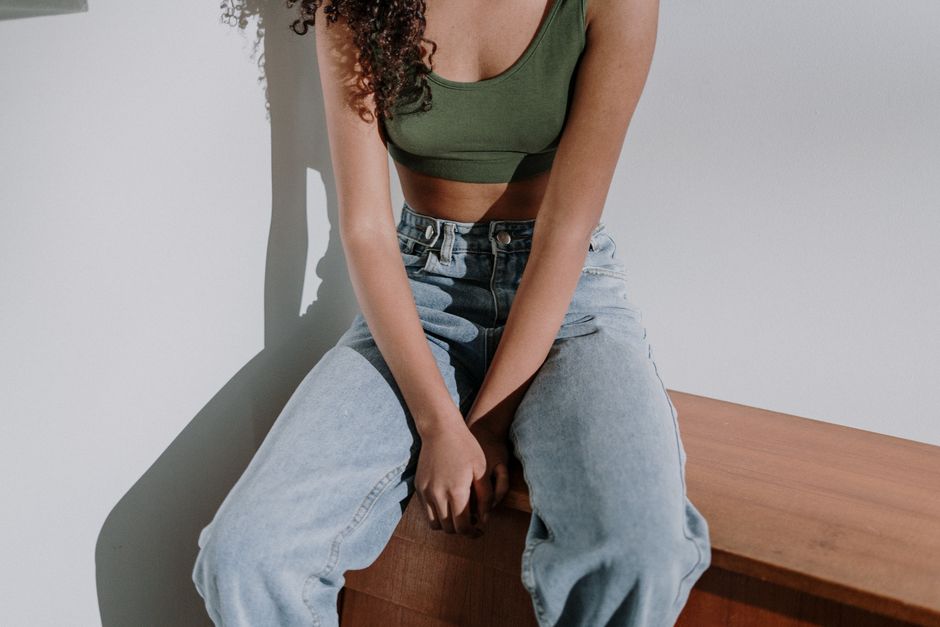
Most people don’t have a denim problem. They have a fabric-weight problem and a trend-cycle problem. You buy a pair of stretchy, acid-washed, wide-leg jeans because an influencer looked great in them. Eighteen months later, the knees are bagged out, the thighs have friction-faded to white, and the silhouette looks dated. You didn’t buy a bad pair of jeans. You bought a temporary pair of jeans. Timeless denim isn’t about avoiding fashion. It’s about understanding the material science and the cuts that outlive the algorithm.
Why Your Jeans Fall Apart: The Fabric Weight Lie
Here is the first thing you need to know: if the denim feels like pajama pants, it is not going to last. The fashion industry has spent the last decade convincing you that “comfort stretch” is the pinnacle of luxury. It isn’t. It’s the pinnacle of planned obsolescence. Elastane, spandex, lycra—whatever you call it—is a synthetic fiber that degrades every time it goes through a hot wash cycle or a dryer. Once the elastane snaps, the jeans lose their shape. That is why your “perfect fitting” skinny jeans from two years ago now look like a deflated balloon.
Timeless denim starts with 100% cotton. Specifically, you want a fabric weight between 12oz and 15oz. Anything under 10oz is a summer-weight jean that will tear at the crotch within a season. Anything over 16oz is raw denim territory—stiff, heavy, and requiring a break-in period that most normal humans find miserable. The sweet spot for durability and comfort is 13.5oz to 14.5oz. This is the weight of classic Levi’s 501s from the 1980s and the weight that Japanese repro brands like Sugar Cane and The Flat Head still use today.
The Elastane Trap
If you see “2% elastane” on the label, that is not a dealbreaker. It’s a warning. A 2% stretch jean will fit better on day one, but it will lose integrity around month 18. A 1% stretch jean is the compromise. If you want zero stretch, you need to accept that the first two weeks will feel like wearing cardboard. That’s the tradeoff. The cardboard feeling goes away. The saggy-knee feeling does not.
The Only Three Cuts That Survive Trend Cycles
You do not need ten pairs of jeans. You need three. The fashion industry wants you to believe that the “barrel leg” or the “horseshoe jean” is essential. It is not. Those are fads designed to make you buy more. Here is the architecture of a permanent denim rotation.
The Straight Leg (The Workhorse)
The straight leg is not skinny. It is not wide. It is a line that runs parallel from the knee to the hem. The Levi’s 501 is the archetype. The A.P.C. Petit New Standard is the elevated version. The Nudie Jeans Gritty Jackson is the sustainable version. A straight leg works with boots, sneakers, loafers, and—if you’re brave—heels. It never looks aggressive. It never looks sloppy. It just works.
The Slim Taper (The Polished One)
For guys or gals who want a cleaner silhouette without looking like a mannequin at a 2016 mall, the slim taper is the answer. It fits close through the thigh and narrows to the ankle. The key here is to avoid anything labeled “super skinny.” If the fabric is stretched tight against your calf, you are wearing a legging. The Nudie Jeans Lean Dean is the benchmark here. It has a mid-rise, a sharp taper, and it comes in dry selvedge options that will fade beautifully over three years.
The Wide Leg / Relaxed (The Modern Classic)
Yes, the wide leg is currently trendy. But it is also a silhouette that has existed since the 1940s. The difference between a timeless wide leg and a trendy one is the rise and the fabric. A timeless wide leg has a high rise that sits at your natural waist and a fabric weight of at least 13oz. The trendy version is low-rise, stretchy, and falls apart. Look for a “1940s” or “1950s” inspired cut. The Levi’s Ribcage Wide Leg is a solid entry point. For men, the OrSlow 105 is the gold standard, but it costs $300. The Uniqlo U Wide Fit Straight Jeans are a $50 alternative that punches way above their weight.
| Cut | Best For | Fabric Weight | Key Brand / Model | Price Range |
|---|---|---|---|---|
| Straight Leg | Everyday, all body types | 13.5–14.5oz | Levi’s 501, A.P.C. Petit New Standard | $80–$250 |
| Slim Taper | Polished casual, office-adjacent | 12–14oz | Nudie Jeans Lean Dean | $180–$220 |
| Wide Leg / Relaxed | Statement, comfort-first | 13–15oz | Levi’s Ribcage Wide, OrSlow 105 | $100–$300 |
| Bootcut | Boots, western styling | 13–14oz | Wrangler 13MWZ | $40–$60 |
Selvedge vs. Non-Selvedge: Does It Actually Matter?
Yes and no. Selvedge denim is woven on shuttle looms, which produce a tighter, denser fabric with a self-finished edge (the white stripe with the red line). It is more durable because the weave is tighter. It also fades better because the indigo sits on the surface of the yarn. Non-selvedge denim is woven on projectile looms, which are faster and cheaper. The fabric is slightly less dense, but it is not automatically bad.
Here is the blunt truth: selvedge is a luxury, not a requirement. A pair of $40 Wrangler 13MWZ jeans will outlast a pair of $200 designer stretch jeans because the Wranglers are 100% cotton and 14.75oz. The selvedge detail is about craftsmanship and fade potential, not raw durability. If you want jeans that last, focus on fabric weight and fiber content first. Selvedge is a bonus. If you want to experience it without spending $300, the Unbranded Brand UB201 is a $98 entry point that uses Japanese selvedge fabric.
One warning: raw selvedge denim bleeds indigo. Do not sit on a white couch in the first month. Do not wash them for the first six months if you want high-contrast fades. This is a commitment. If that sounds annoying, buy washed selvedge or stick to non-selvedge 100% cotton.
Washing Is Where Denim Goes to Die
You are washing your jeans too often. That is the number one reason they fade unevenly and lose their shape. Denim is not a t-shirt. It does not need to be washed after every wear. Unless you are sweating heavily or working in them, you can go 10 to 15 wears between washes. Some denim purists go 30 wears. I am not asking you to be a purist. I am asking you to stop throwing your jeans in the washing machine every Sunday.
When you do wash them, turn them inside out. Use cold water. Use a gentle cycle or hand wash. And for the love of god, do not put them in the dryer. The dryer is what kills the elastane and shrinks the cotton unevenly. Hang dry them. They will be stiff for an hour. They will soften up. Your jeans will last three times longer.
If you have a raw denim pair, the first wash should be a soak in a bathtub with cold water and a tiny bit of Woolite Dark. Do not agitate. Do not wring. Just soak for 45 minutes, drain, and hang dry. This sets the indigo and removes the starch without destroying the fabric.
The $50 Jeans That Outperform $300 Jeans
Price does not equal durability. This is the most important thing I can tell you. A pair of $300 designer jeans with 2% elastane and a 10oz fabric weight will fall apart faster than a $50 pair of Wrangler 13MWZ. The Wrangler 13MWZ is the best-kept secret in denim. It is 14.75oz, 100% cotton, made in Mexico, and costs $40 to $60 depending on the retailer. It is a bootcut, so it is not for everyone, but if you wear boots or want a classic western silhouette, there is no better value on the market.
For a straight leg, the Levi’s 501 Shrink-to-Fit is still the benchmark. $80. 100% cotton. You buy them true to size in the waist and two inches longer in the inseam, then soak them in hot water to shrink them to your body. It is a ritual. It works. The Uniqlo U Wide Fit Straight Jeans are the best budget wide-leg option at $50. They use a 13.5oz denim that holds its shape surprisingly well for the price.
If you want to spend real money, spend it on Nudie Jeans. They offer free repairs for life. You can walk into any Nudie repair shop or mail them in, and they will fix the crotch blowout, the ripped pocket, the frayed hem. That is not a warranty. That is a business model built on the idea that jeans should last a decade. A pair of Nudie Gritty Jackson costs $200. Over ten years, that is $20 a year. That is cheaper than buying a new $50 pair every 18 months.
When Not to Buy Timeless Denim

There is a time and a place for disposable denim. If you are pregnant, if you are in the middle of a significant weight change, or if you are experimenting with a silhouette you are not sure about, do not spend $200 on a pair of raw selvedge jeans. Buy the $40 fast fashion version. Wear it for six months. Figure out if you actually like the shape. Then, when you are ready to commit, buy the real thing.
Also, if you live in a hot, humid climate, 15oz denim is going to feel like a sauna. You will sweat. You will be miserable. In that case, look for a 10oz to 12oz 100% cotton denim. It will not last as long, but you will actually wear it. A pair of jeans in the closet is not sustainable. A pair of jeans on your body is.
The goal is not to own the most expensive denim. The goal is to own the densest, most functional denim for your actual life. If you work in an office, a 13oz straight leg is perfect. If you work outside, the Wrangler 13MWZ is the only answer. If you want one pair that does everything, the Nudie Jeans Lean Dean in a dry selvedge is the closest thing to a universal recommendation I can give. It is slim enough for a blazer, durable enough for daily wear, and backed by a repair program that means you will never have to buy another pair.
The denim industry is moving toward transparency. Brands are starting to list fabric weight, fiber content, and country of origin on the product page. That is a good thing. It means you can make a decision based on data instead of marketing. The next time you buy jeans, ignore the model’s pose. Look at the fabric weight. Look at the fiber content. Look for the word “selvedge” or “100% cotton.” That is where the longevity lives.