

You open your closet. It’s full. Like, genuinely full. Maybe 80 items. Maybe 120. And you still stand there for ten minutes thinking you have nothing to wear. That’s not a personal failure. That’s a math problem.
Studies on decision fatigue show that more choices don’t make choosing easier — they make it harder. A closet with 100 pieces creates thousands of possible combinations, most of which don’t work together. A closet with 30 pieces that all coordinate creates roughly 200+ outfits. The difference is that in the 30-piece closet, nearly every combination actually looks intentional.
This guide is not about minimalism as an aesthetic. It’s about building a system where getting dressed takes 90 seconds and you never feel like you’re wearing the same thing twice. Here’s exactly how to do it, including the pieces worth spending real money on and the ones you can grab for under $40.
Why 30 Pieces Works (And Why 20 or 40 Usually Fails)
Thirty is the sweet spot. Not 20. Not 40. Here’s the reasoning.
A 20-piece wardrobe forces you to do laundry constantly and gives you zero room for seasonal shifts. A 40-piece wardrobe starts to reintroduce the same problem you’re trying to solve — too many barely-worn items that don’t earn their place. Thirty pieces gives you enough variety to avoid the “same outfit every Tuesday” feeling while staying small enough that everything gets worn at least twice a month.
The math breaks down like this: 30 pieces × 30 pieces = 900 potential combinations. Even if only 25% of those actually look good, that’s 225 outfits. You could go 7 months without repeating an exact outfit. That’s more variety than most people with 100-piece closets actually use.
But the real reason 30 works is psychological. When you can see every single item you own at once — no items buried behind other items, no “I forgot I had this” moments — your brain stops scanning and starts deciding. That’s the difference between a closet that drains you and one that works for you.
The 70/30 Color Rule
Seventy percent of your wardrobe should be neutrals: black, white, cream, navy, gray, camel, olive. Thirty percent can be accent colors — but pick ONE accent color, not three. If you pick burgundy, every burgundy piece works with every neutral piece. If you pick burgundy, forest green, AND mustard, you’ve tripled the complexity of matching.
The 3-2-1 Fabric Rule
For every 3 pieces in natural fabrics (cotton, wool, linen, silk), you can have 2 pieces in quality synthetics (viscose, modal, good polyester), and 1 piece in a blend. This keeps your wardrobe breathable and durable without making you spend $400 on every single item. The Uniqlo Merino crewneck sweater ($39.90) is the perfect example of a piece that follows this rule — 100% merino wool at a synthetic price point.
Your 30-Piece Breakdown: The Exact Formula
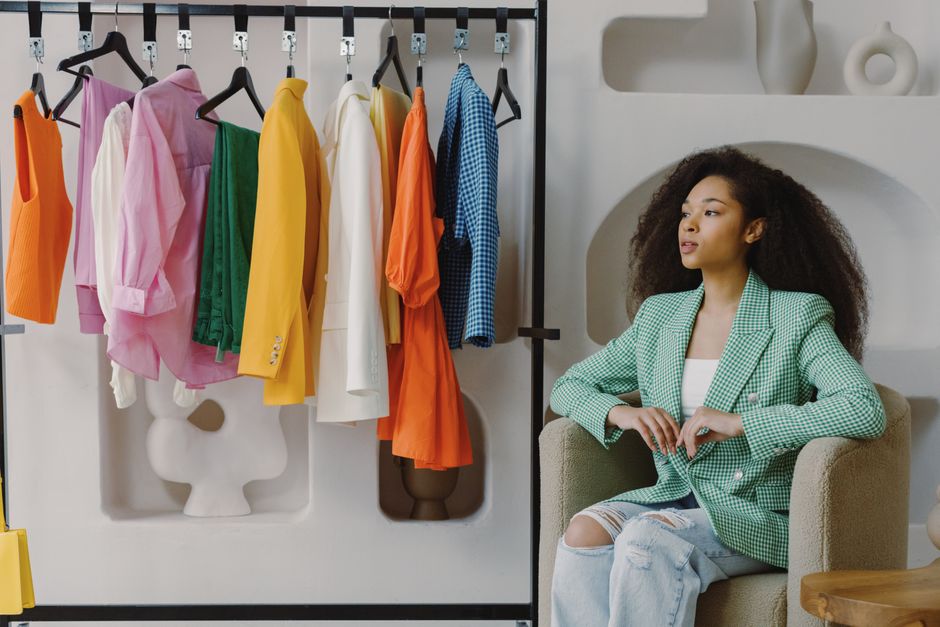
Here’s the exact allocation. Copy this structure, not necessarily the exact items. The numbers matter more than the brands.
- Tops (10 pieces): 3 t-shirts, 2 button-downs, 2 sweaters, 2 blouses or nicer tops, 1 long-sleeve tee or turtleneck
- Bottoms (7 pieces): 2 pairs of jeans (one light, one dark), 1 pair of trousers, 1 skirt, 1 pair of shorts, 1 pair of casual pants, 1 pair of leggings or joggers
- Outerwear (4 pieces): 1 blazer, 1 denim jacket or casual jacket, 1 wool coat or trench, 1 raincoat or puffer
- Dresses (3 pieces): 1 casual day dress, 1 work-appropriate dress, 1 special occasion dress
- Shoes (6 pieces): 1 pair of white sneakers, 1 pair of boots, 1 pair of flats or loafers, 1 pair of heels, 1 pair of sandals, 1 pair of weather-specific shoes
That’s 30 pieces total. Shoes count. Bags and accessories don’t count — you get unlimited accessories because they take up no closet space and they’re how you make 225 outfits feel like 400.
For the work trousers, the Aritzia Effortless Pant ($148) is the piece I’d recommend to almost everyone. High rise, drapey without being sloppy, and they work with sneakers, loafers, or heels. For the dark jeans, Madewell’s Curvy Perfect Vintage Jean ($138) solves the gap-waist problem that plagues most people with hips.
What Goes Wrong: The 5 Failure Modes of Capsule Wardrobes
Most people who try a capsule wardrobe abandon it within 6 weeks. Here’s why, and how to avoid it.
Failure #1: You Bought the “Ideal” Wardrobe Instead of YOUR Wardrobe
Pinterest capsules are full of beige trench coats and cream silk blouses. If you work in a lab, have toddlers, or live somewhere it rains 200 days a year, that capsule fails immediately. The COS wool-blend overcoat ($225) is beautiful and useless if you’re a dog walker in Seattle. Build for your actual life, not the life you see in flat lays.
Failure #2: You Counted Wrong
You have 30 pieces. Then you add “just one more” cardigan. Then a “special occasion” dress. Then suddenly you’re at 45 and wondering why the system feels broken. Thirty means thirty. If something comes in, something goes out. No exceptions. This is the rule that makes the whole system work.
Failure #3: You Skimped on the Wrong Things
A $15 white t-shirt from a fast fashion brand will look worn after 8 washes. You’ll replace it 4 times a year and hate the process. The Everlane Organic Cotton Box-Cut Tee ($30) lasts 2-3 years with proper care. In a capsule wardrobe, every piece gets worn more often, so every piece needs to be more durable. Spend on the high-wear items. Save on the low-wear ones.
Failure #4: You Kept “Fantasy Self” Items
The sequin dress you’ve worn once in 3 years. The stilettos that hurt after 20 minutes. The blazer that’s one size too small. These are fantasy self items — clothes for a version of you that doesn’t exist. They take up space, add decision fatigue, and make you feel guilty every time you see them. Remove them. If you truly need a special occasion dress later, rent one.
Failure #5: You Didn’t Account for Laundry Reality
With only 10 tops, you’re doing laundry every 7-10 days. That’s the reality. If you hate doing laundry, add 2 extra tops and remove 2 bottoms. The 30-piece number is a guideline, not a law. The law is: everything gets worn, everything coordinates, and you never stand in front of your closet feeling lost.
Where to Spend vs. Where to Save
This is the part most capsule guides skip. The truth is you don’t need to spend $3,000 to build a great capsule. You need to spend strategically.
| Item Type | Spend Range | Why | Example |
|---|---|---|---|
| Dark jeans | $120-$180 | Worn 2-3x per week, needs structure and recovery | Madewell Curvy Perfect Vintage Jean ($138) |
| Wool coat | $200-$350 | Worn daily in cold months for 3+ years | Uniqlo Wool Cashmere Chesterfield Coat ($149.90 on sale) |
| White sneakers | $80-$150 | Worn 4-5x per week, needs to hold up | Veja Campo ($150) |
| T-shirts | $20-$35 | Even good ones wear out; replace every 12-18 months | Everlane Organic Cotton Box-Cut Tee ($30) |
| Trend pieces | Under $50 | Trends change fast; don’t invest here | H&M or Zara accent pieces |
| Accessories | Varies | This is where you add personality without breaking the system | Mejuri jewelry, Madewell belts |
The rule of thumb: spend more on items you wear more than twice a week. Spend less on items you wear less than twice a month. It sounds obvious, but most people do the opposite — they splurge on a special occasion dress they wear once and cheap out on the jeans they wear every single day.
The 15-Minute Outfit Formula
Once you have the right 30 pieces, getting dressed becomes mechanical. Here’s the formula that works with almost any capsule.
- Start with a bottom. Jeans, trousers, or skirt. Pick based on your day’s activities. Sitting a lot? Trousers. Walking a lot? Jeans. Warm weather? Skirt or shorts.
- Add a base top. T-shirt, button-down, or long-sleeve tee. This is your foundation layer.
- Add a topper. Blazer, cardigan, denim jacket, or sweater. This is what makes the outfit look intentional rather than just “clothes I put on.”
- Choose shoes based on comfort needs. Not style needs. If you’ll be on your feet for 6 hours, the heels are wrong no matter how good they look.
- Add ONE accessory. A belt, a necklace, a scarf. Just one. This is the difference between “I got dressed” and “I put together an outfit.”
That’s it. Five decisions, each with 2-4 options. Total time: 90 seconds. Total outfits: hundreds.
The key insight here is that the topper does the heavy lifting. A plain white tee and jeans looks basic. Add a camel blazer and it looks polished. Add a denim jacket and it looks casual-cool. Add a cardigan and it looks cozy. Same two base pieces, three completely different outfits.
When NOT to Build a 30-Piece Capsule
This system is not for everyone, and I want to be honest about that.
If you genuinely enjoy fashion as a creative hobby — if you love experimenting with trends, thrifting for unique pieces, and building outfits around statement items — a strict 30-piece capsule will feel like a cage. Don’t do it. The capsule wardrobe is for people who want getting dressed to be easy, not for people who want it to be interesting. Both are valid. They’re just different goals.
If you’re a size that’s hard to fit, a strict capsule can be frustrating. When you finally find a pair of pants that fits, you want to buy them in three colors — and you should. A 35-piece capsule with three pairs of the same pants in different colors is better than a 30-piece capsule that doesn’t fit.
If you live somewhere with extreme seasons, you need two capsules. A 30-piece summer capsule and a 30-piece winter capsule, with 10 shared pieces. That’s 50 pieces total, which is still dramatically less than most people own.
For everyone else — for the person who stands in front of a full closet feeling empty, who wears 20% of their clothes 80% of the time, who wants to stop thinking about what to wear — the 30-piece capsule is the most practical system I’ve found. Start with the formula. Adjust for your climate and lifestyle. And give it 6 weeks before you judge. The first week feels restrictive. The sixth week feels like freedom.