
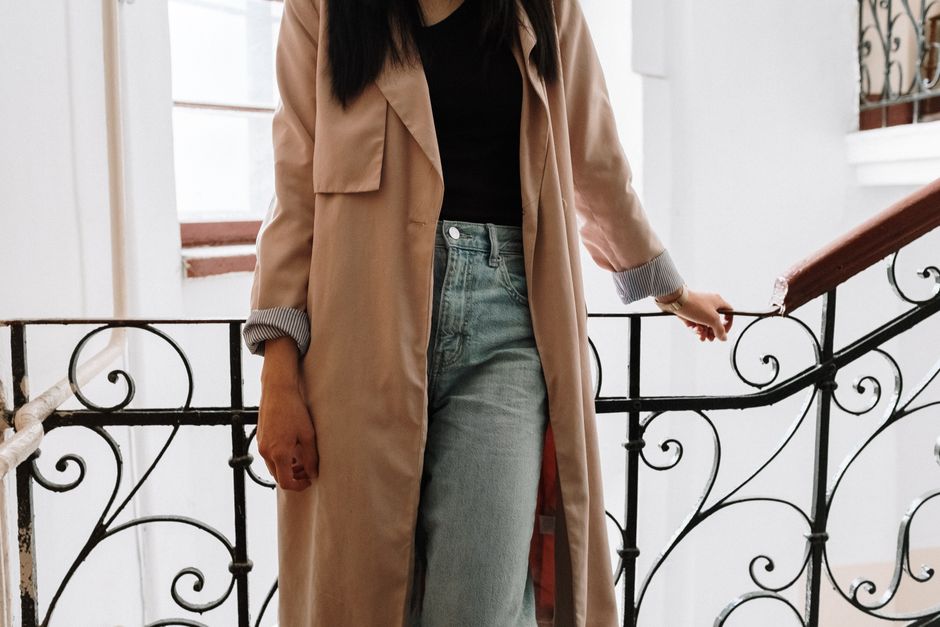
You leave home in a fine-gauge sweater, a button-down, and tailored trousers, then discover your coat sleeves will not move past your elbows. The chest pulls. The cuffs bunch. Your polished office outfit turns into a padded tube before you reach the train. The fix is not buying a larger sweater. It is choosing a coat with enough room through the upper arm, shoulder, and back without adding a sloppy box around your entire body.
The best January layering coat is a straight, lightly structured wool coat with a clean shoulder, a smooth lining, and at least 2 inches of extra room over your thickest work knit. Start there, then reject anything that fails the arm test.
Which Coat Shape Sits Best Over a Sweater?

A straight single-breasted topcoat is the safest shape for office knits because it leaves room at the chest, keeps the front clean, and does not fight with a blazer underneath. The table below gives each common shape a useful starting point, but the verdict is clear: choose straight and lightly structured unless your commute demands a different job.
| Coat shape | Best layer underneath | Useful ease | Main weakness | Verdict |
|---|---|---|---|---|
| Straight single-breasted | Merino sweater, shirt, slim blazer | 2 to 3 inches at chest | Less waist definition | Best everyday office choice |
| Double-breasted | Fine knit, shirt, light tailoring | 3 to 4 inches at chest | Can look bulky when buttoned | Best for wind and formal offices |
| Wrap coat | Chunky knit, dress, relaxed tailoring | 3 to 5 inches at chest | Belt can press into layers | Best for flexible fit |
| Cocoon coat | Thin knit and narrow trousers | 4 inches at chest | Swallows sharp workwear | Good only with slim layers |
| Short car coat | Fine sweater, blouse, trousers | 2 inches at chest | Leaves skirts and dresses exposed | Best for mild January weather |
The clean winner: a straight, single-breasted topcoat
This shape creates the least visual noise over a ribbed sweater. Its buttons sit down the center, the lapels frame the neckline, and the hem usually lands around mid-thigh or the knee. That length covers a blazer without creating a second hem at the hip. Choose navy, charcoal, camel, or dark brown if the coat needs to work four days a week.
The shapes to reject
Skip a sharply fitted princess-seam coat if you regularly wear cable knits or jackets. Skip a dramatic cocoon coat if your office clothes already have volume. A coat that looks roomy on the hanger can still pinch at the armhole once you add a sleeve with ribbing. Measure the garment and test the layer, not just the label.
How to Check Coat Fit Before You Buy
Do this in five minutes in a fitting room or at home before removing the tags. The order matters because a coat can look attractive from the front and still fail across the back.
Five-minute fitting sequence
- Put on the thickest office knit you plan to wear. Use the real sweater, not a thin T-shirt.
- Button or zip the coat fully. If the front gaps across the bust or pulls into diagonal lines, go up a size or choose a wider cut.
- Raise both arms to shoulder height. The coat should move with you without lifting several inches from the wrist.
- Reach forward as if you are holding a train pole. Tightness across the shoulder blades means the back pattern is too narrow.
- Sit down, cross your legs, and place your hands on a desk. The hem should not ride sharply into your lap or force the front closure open.
What the mirror cannot tell you
Check the sleeve opening against your sweater cuff. A narrow opening traps a thick ribbed sleeve and makes the whole outfit look bunched. Check the lining for friction too; rough polyester can catch on brushed wool and pull the knit upward throughout the day. Finally, walk for two minutes with the coat closed. A good fit should still feel normal after movement, not just during a posed mirror check.
Buy the coat that passes the movement test, even if another coat looks more elegant while you stand still. January clothing has to work in motion.
Which January Coats Actually Work Over Office Knits?

My pick for most office wardrobes is the J.Crew Daphne topcoat in Italian boiled wool. It is not the most dramatic option, but its midthigh length, slightly roomy fit, and dense boiled wool make it practical over a sweater without looking like outerwear from a ski resort.
Best for most offices: the J.Crew Daphne
The Daphne wins because it covers the hips and works with trousers, skirts, and dresses without swallowing the outfit. Its listed 36-inch body length is long enough for a typical blazer but short enough for crowded public transport. The boiled wool gives warmth without the puffed profile of a down coat. Take your normal size only if your sweater is slim; choose the roomier option if your work knits have ribbed sleeves or dropped shoulders.
Best upgrade: the COS Double-Faced Wool Long Coat
The COS long coat earns its higher price through a cleaner, more architectural shape and a 43.5-inch back length. Its wool and TENCEL Lyocell blend feels smoother than a rough, loosely woven wool coat, and the lapels can fold up into a mock-neck effect when the wind picks up. It is the strongest choice for a long blazer, wide-leg trousers, or a dress that needs full coverage. The tradeoff is dry-cleaning and a price that makes sense only if the coat will be worn constantly.
When Should You Skip a Wool Coat in January?
Wool is the right answer for polished city workwear, but it is not the right answer for every January commute. A good coat must match the weather, transport, and amount of walking involved.
Should you buy a puffer instead?
Buy a puffer when your commute includes long outdoor waits, freezing wind, or temperatures below the range where a lined wool coat can keep you comfortable. A lightweight down or synthetic puffer traps more air for less weight, and a hood protects better than a wide lapel. Skip the glossy oversized version for a formal office; choose a matte, hip-length style with a simple collar so it does not fight with your work clothes. The verdict is simple: puffer for exposure, wool for indoor-to-indoor commuting.
Is a trench enough for January?
Usually not. A cotton trench blocks light rain and looks excellent over a fine merino sweater, but it does little against sustained cold unless you add a removable insulated liner. Buy one for a mild, wet climate or a short car commute. Do not make it your only January coat in a city where you walk ten minutes to the train in single-digit temperatures.
Who should skip wool altogether?
Skip wool if you react to the fiber, hate dry-cleaning, or need a coat for wet snow and frequent cycling. A technical shell over a compact insulated layer will protect better and dry faster. Also skip a belted wrap coat if you carry a work tote across your chest; the belt and bag strap can create pressure, shifting the coat and crushing the knit underneath. The most expensive failure is a beautiful coat that stays on the hanger because it is wrong for your actual route.
Which January Layering Coat Should You Buy?

Best overall
Best for difficult commutes
Choose the Mango Manteco wool coat with belt when wind around the neck is your main problem, choose the COS shawl-collar coat when you want maximum length over dresses and long knits, and skip wool for a technical insulated coat when your January routine includes wet snow, long outdoor waits, or cycling.
The coat should make the sweater easier to wear, not force you to flatten it, size down, or leave the top button open all day.