
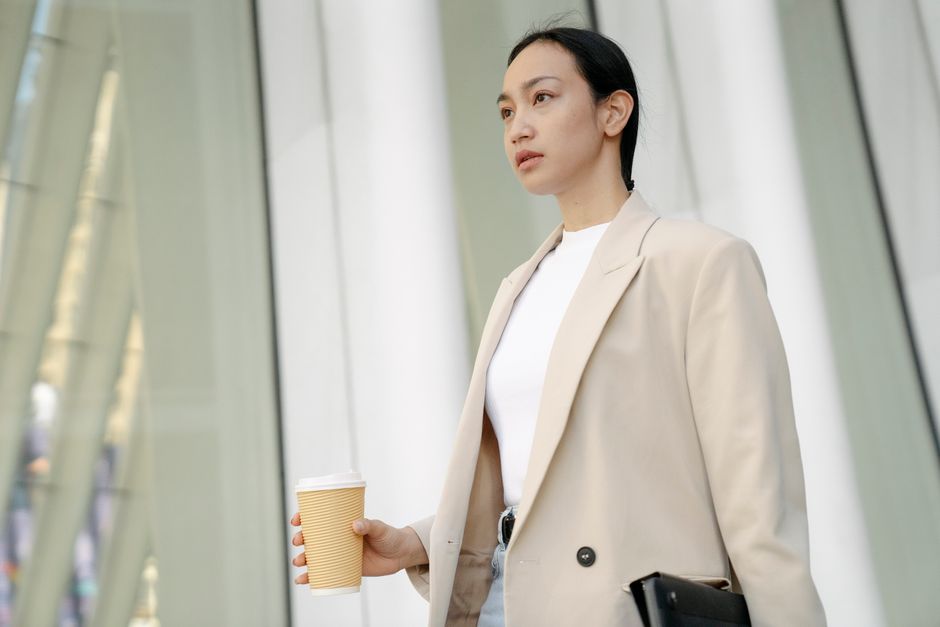
Most interview outfit advice online is written by people who haven’t sat on the other side of the table. They tell you to “express your personality” and “add a pop of color.” Bad advice for most industries. I’ve been in rooms where candidates were eliminated before they answered a single question — because their clothes told a story they didn’t intend to tell. The good news: you don’t need a $1,500 suit. You need to understand three things most people never learn about interview dressing: fit geometry, fabric behavior under stress, and the silent signals of color. This guide covers all three.
The Fit Rule That Overrides Every Other Fashion Rule
If your clothes don’t fit, nothing else matters. Not the brand. Not the price. Not the color. A $400 SuitSupply jacket that pulls at the button looks worse than a $90 Uniqlo blazer that sits clean. Hiring managers may not know why something looks off — they just register it as “unpolished.”
The core principle: fabric should follow your body’s natural lines without stretching, bunching, or collapsing. Here’s what that means in practice:
- Shoulder seams must end exactly where your shoulder bone ends. Half an inch too wide and you look like you borrowed your dad’s jacket. Too narrow and you look like you’re bursting out.
- Jacket button stance: the top button (on a two-button jacket) should sit at or just above your navel. When buttoned, you should be able to slide a flat hand between the jacket and your chest — no more, no less.
- Trouser break: one slight fold at the front of the shoe. No fold = too short (looks like you’re waiting for a flood). Multiple folds = too long (looks sloppy).
- Sleeve length: about 1/4 to 1/2 inch of shirt cuff should show when your arms hang naturally.
The single best investment you can make is a $30–$60 tailoring visit. Take any off-the-rack jacket and have the sides taken in, the sleeves shortened, or the trouser hem adjusted. A tailored $200 jacket beats an untailored $800 jacket every single time.
When To Skip The Tailor
If the shoulders don’t fit, don’t buy the jacket. Tailors can fix sleeve length, waist suppression, and trouser hems. They cannot fix shoulder width without rebuilding the entire garment. That’s the one measurement you must get right off the rack.
Fabric Choices That Survive Sweaty Palms And Long Waits
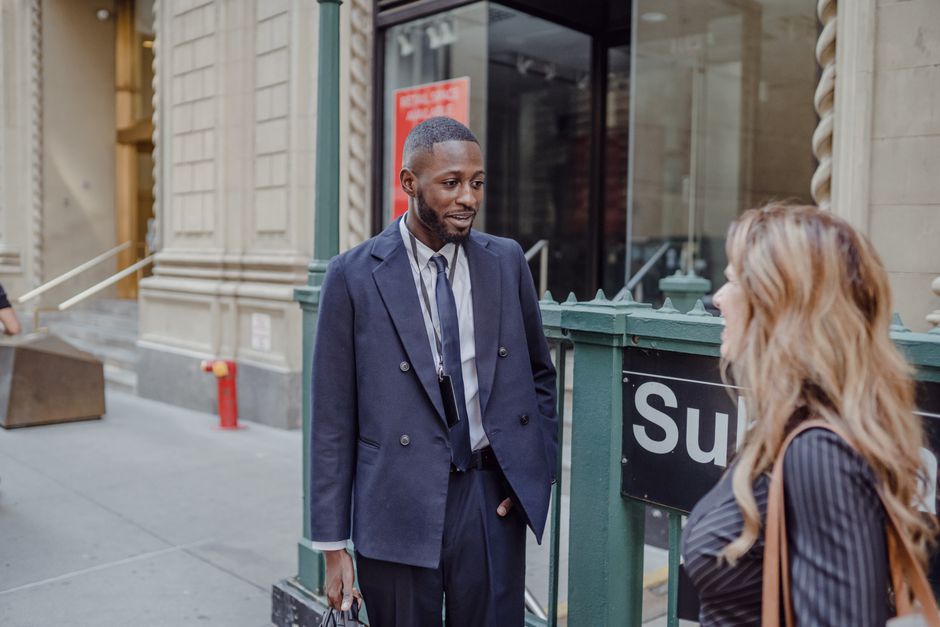
Interviews are stressful. Your body knows this. It responds with sweat, especially in the underarms, lower back, and palms. The fabric you wear determines whether that sweat shows up as a dark patch on your shirt or evaporates quietly.
Here’s the comparison that matters:
| Fabric | Sweat Visibility | Wrinkle Resistance | Best For |
|---|---|---|---|
| Cotton (broadcloth) | High — dark patches show immediately | Low — wrinkles by lunch | Only if you run cold and interview in AC |
| Cotton (oxford cloth) | Medium — thicker weave hides some moisture | Medium | Business casual interviews |
| Merino wool | Low — wicks moisture and dries fast | High — naturally resists wrinkles | Suits, trousers, and dress shirts |
| Polyester blends | Low — but traps heat and feels clammy | High | Budget-friendly option, but avoid 100% poly |
| Linen | Medium — dries fast but wrinkles instantly | Very low | Never for interviews. Just don’t. |
My pick: a merino wool suit or at minimum a merino-blend dress shirt. The Charles Tyrwhitt non-iron shirts ($89–$119) use a cotton blend that resists wrinkles, but pure merino from brands like SuitSupply ($499–$699 for a full suit) handles sweat better. If you’re on a tight budget, the Uniqlo AIRism undershirt ($19.90) worn under any dress shirt will absorb sweat before it reaches your outer layer. That single undershirt has saved more interviews than any tie ever has.
Color Signals: What Navy, Charcoal, And White Actually Communicate
Color theory for interviews isn’t about “what looks good on you.” It’s about what your clothes say about your judgment. And the research is consistent: darker, muted colors read as more competent and trustworthy in professional settings.
Navy is the safest suit color for a reason. It communicates stability without the formality of black. It works in finance, tech, healthcare, and retail. If you own exactly one suit, make it navy.
Charcoal gray is the second choice. Slightly more formal than navy, reads as authoritative. Good for law firms, consulting, and senior roles.
Black is a trap. It reads as either funeral attire or nightlife. Unless you’re interviewing at a fashion house or a creative agency where black is the uniform, skip it.
For shirts: white or light blue. White is the most formal and works with every suit color. Light blue softens the look slightly and hides minor sweat better than white. Skip patterned shirts for first-round interviews — stripes and checks add visual noise that distracts from your face.
For ties (if the industry requires one): solid navy, burgundy, or dark green. No novelty patterns. No logos. A $40 Charles Tyrwhitt silk tie looks identical to a $150 designer tie from across the desk.
Business Casual Interviews: The Harder Dress Code To Nail
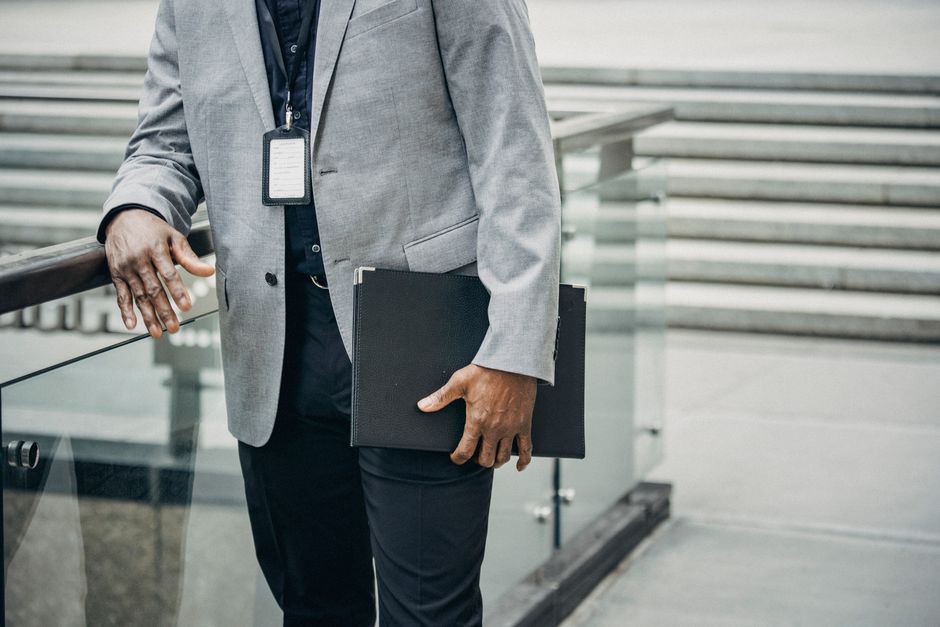
Suits are easy because the rules are clear. Business casual is harder because “casual” invites mistakes. A tech startup interview in San Francisco does not mean you should wear the same hoodie the interviewer is wearing. You’re not an employee yet. You don’t get the employee uniform privileges.
The business casual interview formula that works across industries:
- Base layer: Oxford cloth button-down shirt (OCBD) in white or light blue. The Uniqlo OCBD ($39.90) is the price-to-quality king. The Brooks Brothers original ($140) is the traditional pick if you want more structure.
- Mid layer: A knit blazer or unstructured blazer in navy or gray. The Uniqlo comfort jacket ($79.90) works if you’re on a budget. The Bonobos unstructured blazer ($399) adds more polish without looking stiff.
- Bottom layer: Chinos in navy, gray, or olive. Not khaki-colored — too casual. The J.Crew 484 slim-fit chino ($98) is a reliable cut. The Bonobos washed chino ($119) has more room in the thigh.
- Shoes: Leather or suede derbies, loafers, or minimal leather sneakers. The Cole Haan Grand Crosscourt sneaker ($150) walks the line between clean and casual. The Allen Edmonds Park Avenue oxford ($425) is the formal end if you want a shoe that works for both suits and chinos.
The one rule that never changes: your clothes should be clean, pressed, and free of logos. A wrinkled Uniqlo shirt reads worse than a pressed one from any brand.
Common Failure Modes: What Gets Candidates Eliminated Before They Speak
You can get everything else right and still blow it with one of these mistakes. I’ve seen every one of these happen in real interviews.
Brand-new shoes worn for the first time. You spend the entire walk to the interview room thinking about your heels rubbing raw. Break in shoes for at least a week before interview day. Wear them to the grocery store. Wear them around your house. Your feet will thank you, and your face won’t show pain during the handshake.
Too much fragrance. One spray of cologne, max. Or none. A hiring manager with a fragrance sensitivity will remember you for the headache you gave them, not your qualifications.
Visible undershirt lines. Wear a V-neck undershirt under an open-collar shirt. A crew-neck undershirt peeking out above your shirt buttons looks like you got dressed in the dark.
Dry cleaning tags still attached. Check the sleeves, the back, the hem. Those little plastic tags and stickers are invisible to you and obvious to everyone else.
Over-accessorizing. A watch is fine. A wedding ring is fine. That’s it. No bracelets, no necklaces, no pocket squares with wild patterns, no tie bars unless you’re in finance and even then keep it minimal.
The 24-Hour Pre-Interview Checklist That Prevents Last-Minute Panic
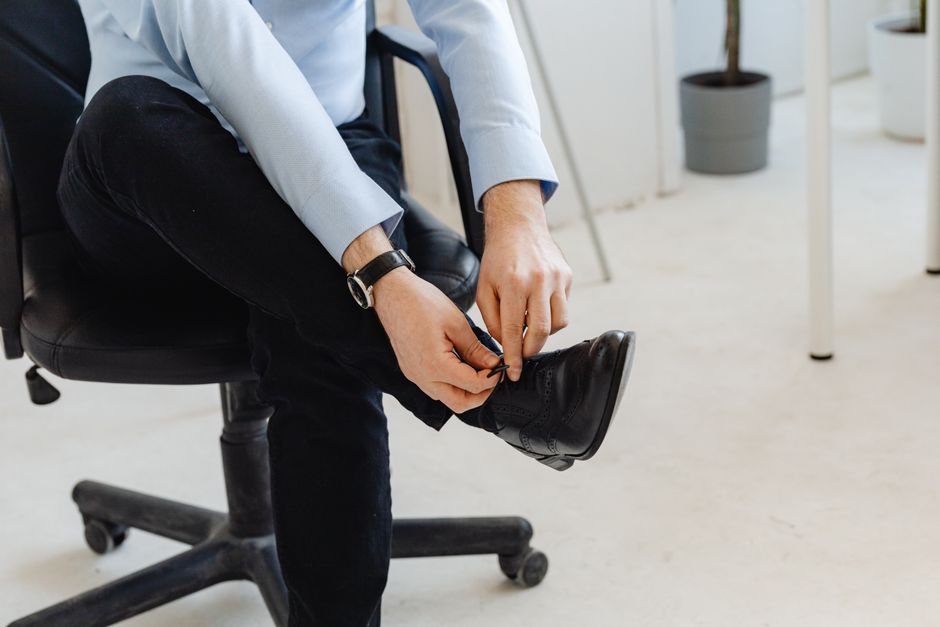
You’ve picked the outfit. Now make sure it actually works when you need it. Do this the day before, not the morning of.
Try on the full outfit including shoes and underwear. Not just the shirt and jacket. The full thing. Walk around. Sit down. Stand up. Reach forward like you’re shaking hands. Does anything pull? Does anything ride up? Fix it now.
Check the lighting. Look at yourself in natural light and in bathroom lighting. Some shirts are see-through under bright office lights but look fine at home. The Uniqlo AIRism undershirt solves this if your dress shirt is thin.
Steam or iron everything. Even if it’s “non-iron.” The Charles Tyrwhitt non-iron shirts are good, but they still benefit from a quick steam after being folded in a drawer for two weeks.
Pack a backup. A second shirt in a garment bag in your car or bag. A Tide pen for coffee spills. A small pack of tissues for sweaty palms before the handshake. These aren’t paranoid — they’re insurance.
The interview outfit isn’t about looking fashionable. It’s about removing every possible distraction so the interviewer focuses on what you’re saying. When your clothes work, they disappear. That’s the goal. Silence from your outfit is the loudest thing you can wear.
As workplaces continue loosening dress codes, the gap between “acceptable” and “impressive” is widening. The candidates who understand fit, fabric, and color signals will stand out more, not less, as everyone else gets sloppier. Your interview outfit is the one part of the process you control completely. Use it.